American Mahjong guide
How to Read the NMJL Card Without Getting Overwhelmed
A practical guide to reading the National Mah Jongg League card, including sections, colors, X and C hands, jokers, pairs, suits, and strategy.
The National Mah Jongg League card is the center of American Mahjong, and yes, it can look like a tiny spreadsheet had a dramatic afternoon. Beginners often stare at the colors, numbers, and letters and wonder where to even begin.
The trick is to stop reading the card as a wall of possibilities and start using it as a decision tool. The card tells you which hands are legal this year, how tiles must be grouped, whether a hand can be exposed, and how much it is worth.
Start With the Big Idea
In American Mahjong, you do not win by making any four sets and a pair. You win by matching one complete line on the current NMJL card. Every tile in your final 14-tile hand must fit that line exactly.
That means your first job is not memorizing every hand. Your first job is learning how to scan for hands that fit your starting tiles.
Understand the Main Sections
The card is divided into hand families. The exact hands change each year, but the broad categories tend to feel familiar over time. Common sections include year hands, consecutive runs, like numbers, winds and dragons, quints, and singles and pairs.
Each section is a search filter. If your rack has many related numbers, look at consecutive runs or like numbers. If you have winds, dragons, and flowers, check the honor-heavy sections. If you have several jokers, quints and kong-heavy hands may become more realistic.
Read Colors as Suit Instructions
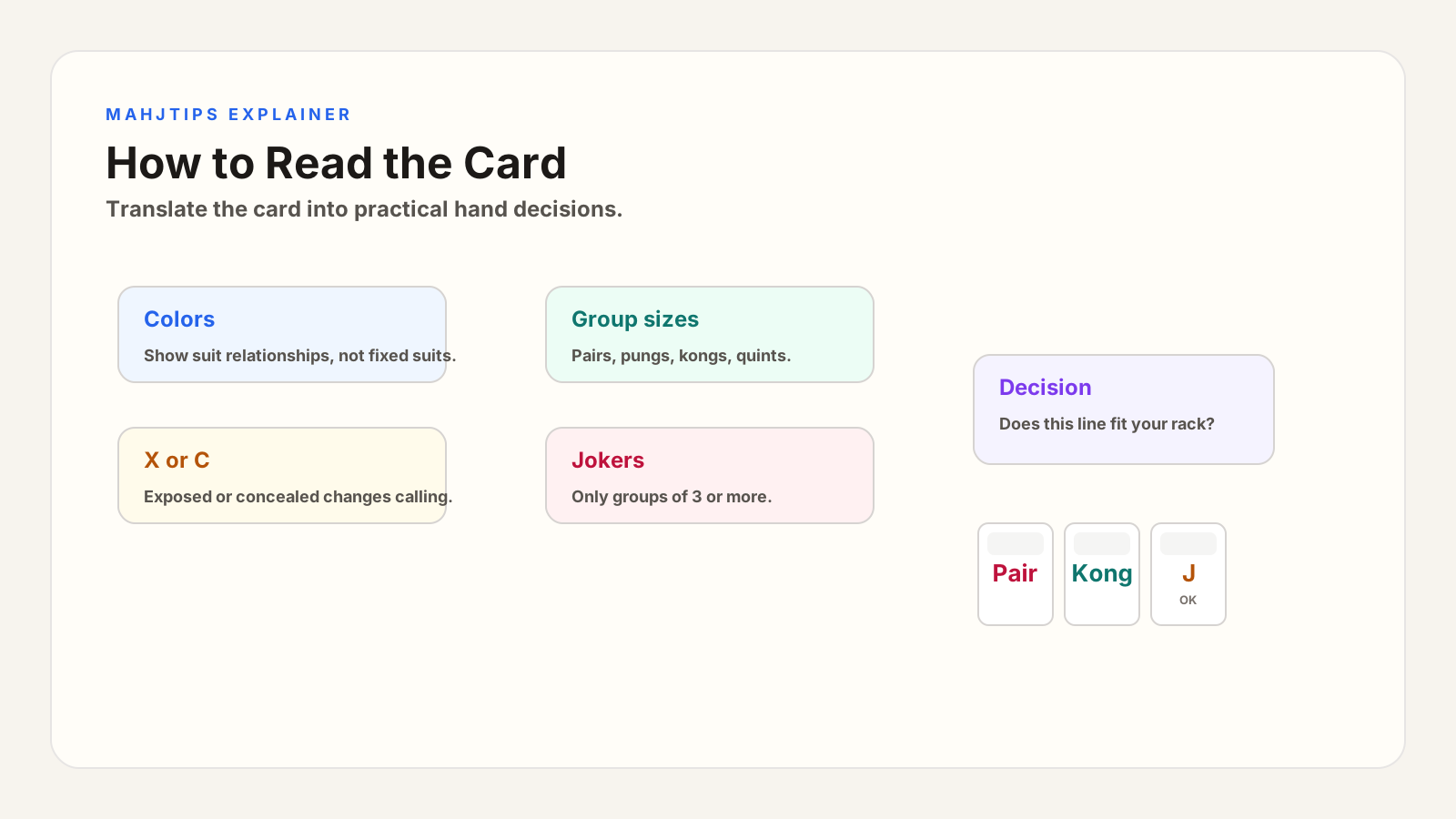
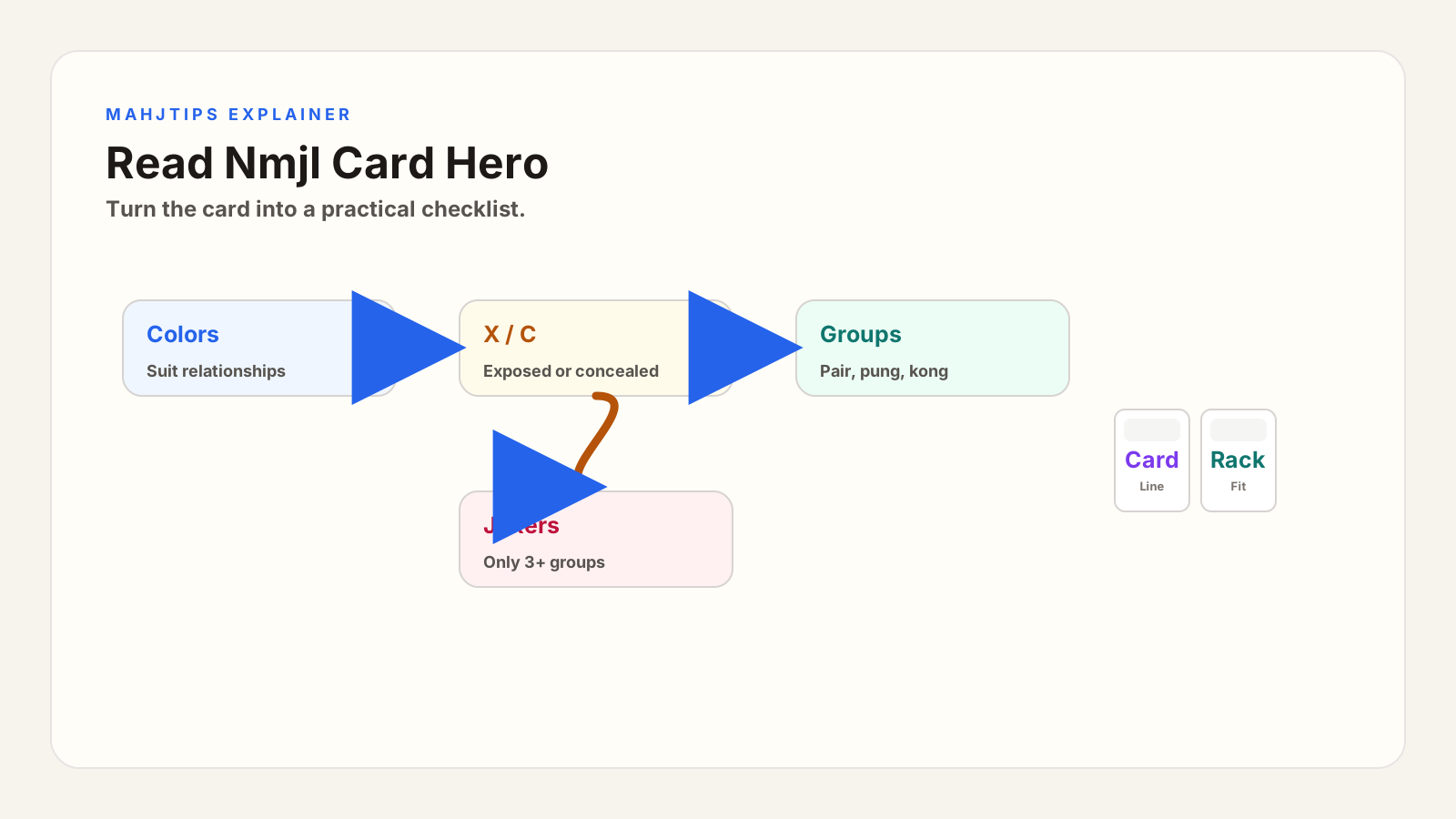
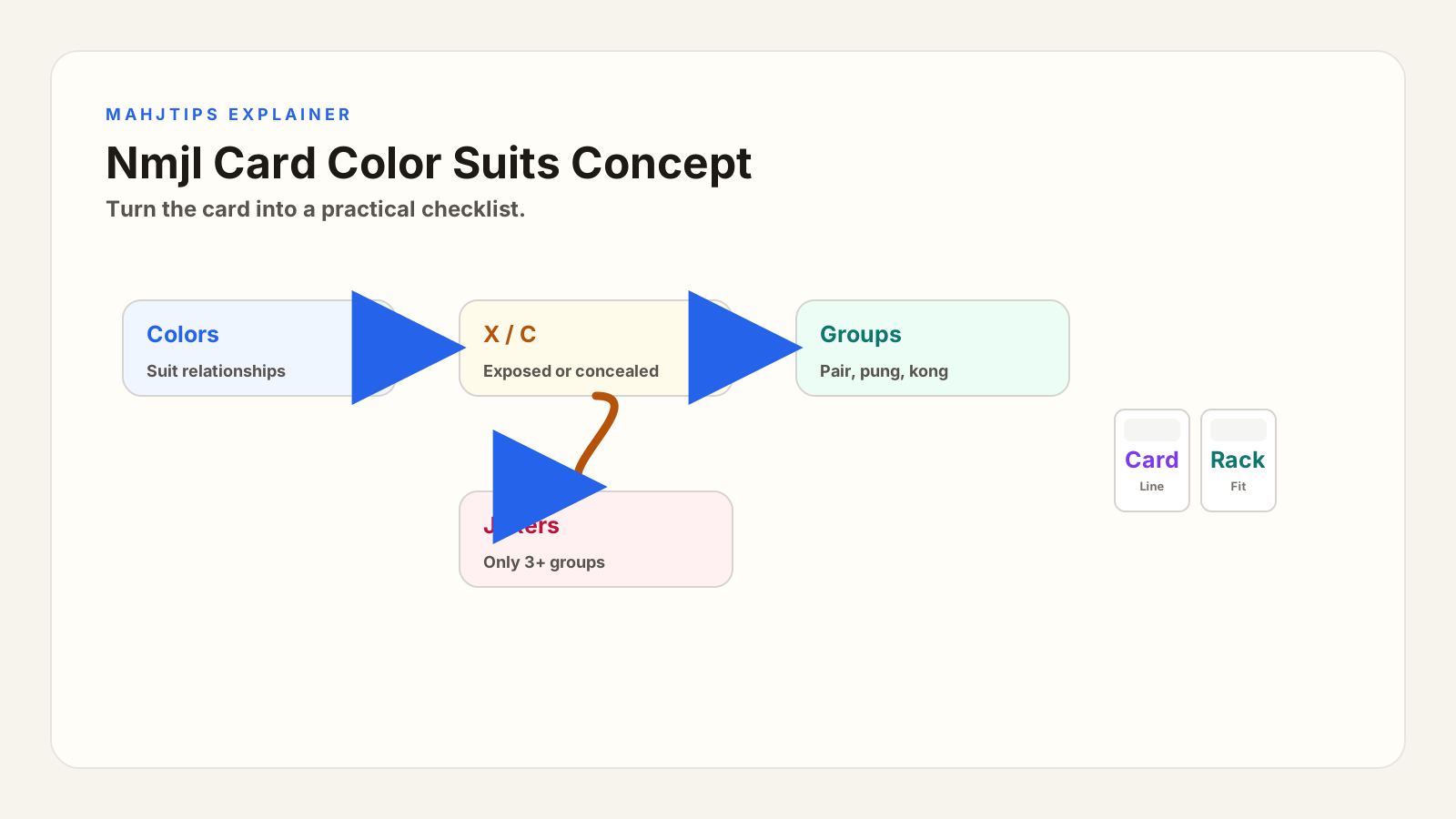
One of the most useful card-reading skills is understanding color. On the NMJL card, colors do not tell you that a tile must be bam, crak, or dot. Instead, colors show suit relationships.
If a line uses one color for all numbers, that usually means one suit. If it uses two or three colors, you need two or three suits according to the pattern. You choose the actual suits based on your tiles.
For example, a pattern shown in two colors might be playable as bams and dots, craks and bams, or dots and craks depending on your rack. The printed color is a map, not a suit label.
Decode X and C
Most American Mahjong cards mark hands as exposed or concealed.
X means the hand may be exposed. You can call discarded tiles to complete legal groups, such as pungs, kongs, or quints.
C means concealed. You cannot call discards for exposures while building the hand. The only discard you may call is the tile that completes Mah Jongg.
Strategy note: Concealed hands are often powerful, but they require patience. If you are a beginner, do not choose a concealed hand just because it looks close. Ask whether you can realistically draw the missing tiles yourself.
Translate Every Line Into Groups
Before committing to a hand, break it into group sizes:
- Singles: one tile
- Pairs: two identical tiles
- Pungs: three identical tiles
- Kongs: four identical tiles
- Quints: five identical tiles
- Sextets: six identical tiles
This matters because jokers are only useful in groups of three or more. If a hand depends on many pairs or singles, your jokers may not help as much as you think.
Check Joker Fit
Jokers can make a difficult hand possible, but they do not solve every problem. A joker can stand in for a missing tile in a pung, kong, quint, or sextet. It cannot be used as a single or in a pair.
When evaluating a hand, ask:
- Which parts of this hand can use jokers?
- Which parts must be completed naturally?
- If I expose with a joker, can opponents exchange for it?
This quick check prevents one of the most common beginner errors: chasing a hand where the hard part is actually the pair.
Use the Card During the Charleston
The Charleston is not just a tile cleanup phase. It is your first strategic filter.
Before your first pass, sort your rack into possible hand families. Keep tiles that support two or more possible hands. Pass tiles that are isolated, duplicated in useless ways, or unlikely to help your current options.
By the end of the first Charleston, you should usually have two or three candidate hands. By the end of the second Charleston, you should be leaning toward one plan with one backup.
Beginner Strategy: Count Needed Tiles
A hand that looks pretty on the card may be bad for your rack. Instead of asking, "Do I like this hand?" ask, "How many exact tiles do I still need?"
Strong candidates usually have:
- Existing pairs or near-pairs in the right places
- Flexible suit choices
- Groups where jokers can help
- A backup hand in the same section or number pattern
Weak candidates usually require:
- Multiple exact pairs you do not already have
- A concealed structure with too many missing tiles
- Several single tiles that must be drawn naturally
- A suit split that conflicts with your rack
A Beginner-Friendly Way to Scan
When you pick up the card, do not start at the top and try to absorb everything. Look at your rack first. If your rack has repeated 7s, scan like numbers. If it has 3s, 4s, and 5s, scan consecutive runs. If it has winds, dragons, and flowers, scan the honor-heavy sections.
This is much easier than asking, "What hand should I play?" Ask, "Which two sections does my rack already resemble?" That question gives your eyes somewhere to land.
FAQ
Do I need to memorize the NMJL card?
No. Memorization helps over time, but beginners should focus on scanning sections, recognizing group sizes, and finding flexible hands.
What does concealed mean on the card?
Concealed means you cannot expose during play. You must draw the tiles yourself, except you may call the final tile that gives you Mah Jongg.
Why do my jokers not help with some hands?
Jokers cannot be used in singles or pairs. Hands with many singles and pairs often require more natural tiles.
Internal Link Ideas
- Link to the glossary when defining pungs, kongs, quints, and exposures.
- Link to a joker article from the joker section.
- Link to a Charleston strategy article from the Charleston section.
Sources Consulted
- American Mah Jongg Association rules companion: https://www.americanmahjonggassociation.com/american-mah-jongg-rules-companion
- American Mah Jongg Association rules: https://www.americanmahjonggassociation.com/american-mah-jongg-rules
- MahjongCompare rules guide: https://mahjongcompare.com/mahjong-rules
What do the colors on the NMJL card mean?
The colors show suit relationships. They do not permanently mean bams, craks, or dots. You choose the actual suits based on the pattern and your rack.
Related Guides